
The core difference: absorption vs adsorption
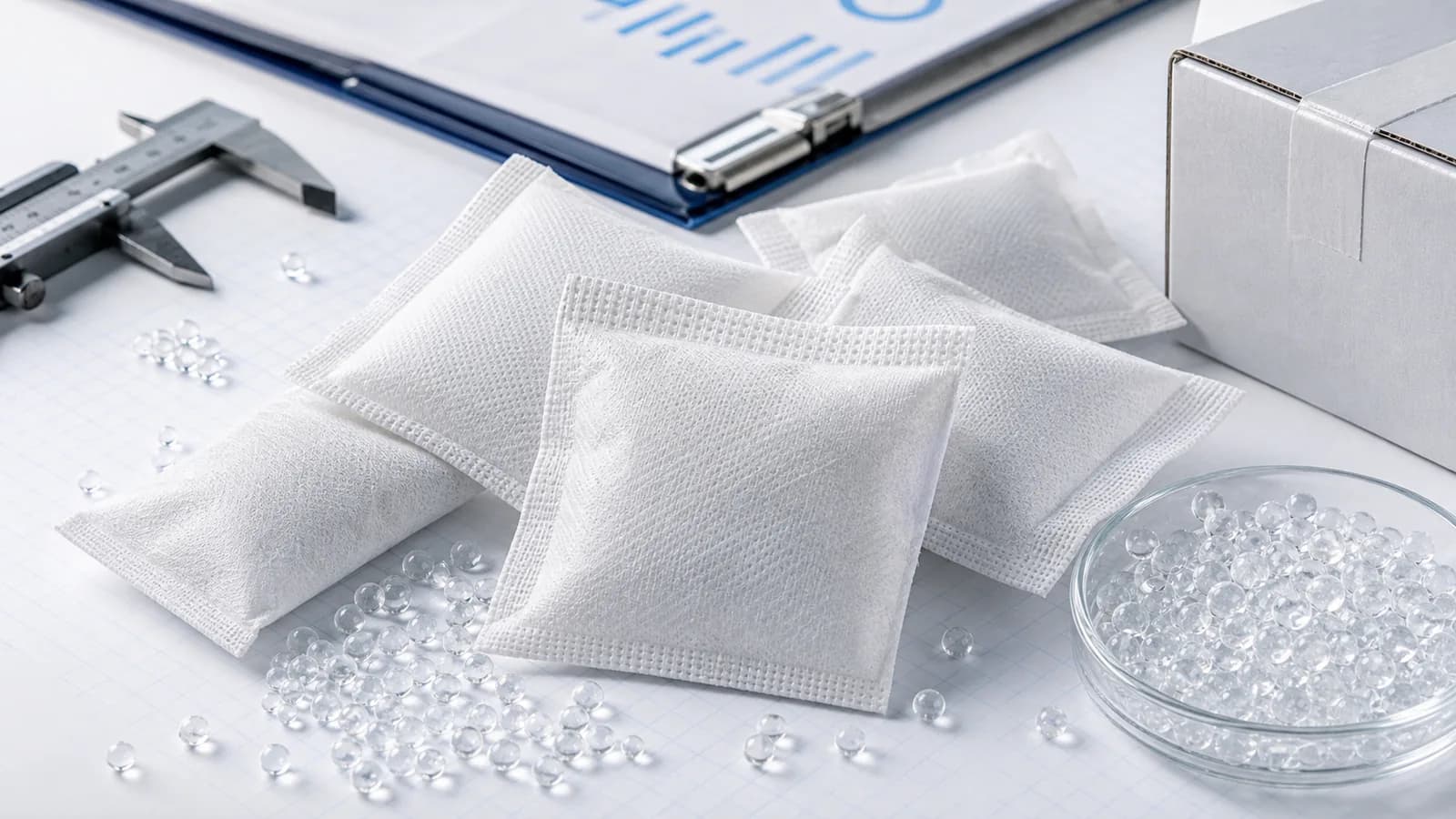
Silica gel is an adsorbent: water molecules cling to the huge internal surface area of solid silica beads, which stay dry and solid the whole time. Calcium chloride is an absorbent (deliquescent): it chemically pulls in water, dissolves into a brine, and turns to liquid as it works. That single difference, stays solid vs turns to liquid, drives almost every practical choice between them.
- Silica gel, physical adsorption; beads remain solid; steady, controllable drying.
- Calcium chloride, deliquescent absorption; converts to a gel/brine; very high pull.
- Both lower relative humidity, but calcium chloride keeps absorbing at high humidity where silica gel saturates.
Moisture capacity: calcium chloride wins on volume
For sheer quantity of water removed per gram, calcium chloride is far ahead. It can absorb well over its own weight in water in humid conditions, while silica gel typically holds around 20–40% of its weight. That is why calcium chloride dominates high-humidity, long-transit situations like ocean freight, and why silica gel, precise and clean, dominates in-carton and unit-level protection.
- Calcium chloride: absorbs up to ~200–300% of its weight at high humidity.
- Silica gel: absorbs ~20–40% of its weight (more at very high RH).
- For a 40 ft container crossing the equator, capacity matters most → calcium chloride strips.
- For a sealed carton of electronics, control and cleanliness matter most → silica gel.
Behaviour and containment
Because calcium chloride liquefies as it absorbs, it must be held in a leak-proof, multi-layer pouch or hanging strip with a reservoir, so the brine never touches the cargo. Silica gel stays dry and solid throughout, so a simple breathable sachet is enough and there is zero leak risk against sensitive goods. Handling and packing lines are simpler with silica gel; calcium chloride needs the right containment format.
- Calcium chloride → use sealed container strips / poles with a brine reservoir; never loose.
- Silica gel → breathable Tyvek, paper, or film sachets; safe directly beside product.
- A leaking calcium chloride pouch can stain or damage cargo, format quality is critical.
Best use cases for each
Match the desiccant to the job rather than treating them as rivals. Calcium chloride is the container-and-warehouse workhorse for fighting condensation over weeks at sea. Silica gel is the versatile unit-level protector for cartons, cases, and moisture-sensitive individual products, and the only one of the two that comes in food-grade and low-dust electronics grades.
- Calcium chloride: shipping containers, long ocean transit, high-humidity warehousing, bulk cargo.
- Silica gel: cartons, electronics, pharma, leather, retail sachets, documents, camera/optics.
- Food or direct-contact packaging: silica gel (food-grade options); calcium chloride is not for direct contact.
- Reusable/rechargeable need: silica gel only.
Cost, reuse, and handling
Per gram of water removed, calcium chloride is usually the cheaper way to dry a large air volume, which is why container programmes favour it. Silica gel costs more per unit of capacity but is cleaner, safer next to product, and can be regenerated (dried out and reused), an advantage for closed-loop or reusable-packaging setups. Neither is 'better' outright; the cheaper total cost depends on the job.
- Calcium chloride: low cost to dry a big space; single-use; needs safe brine disposal.
- Silica gel: higher cost per unit; reusable by regeneration; clean, low-dust grades available.
- Total cost = capacity needed × format × handling, decide per shipment, not by sticker price.
How to choose in one line
If you are drying a large air volume against sustained high humidity over a long transit, a shipping container or humid warehouse, reach for calcium chloride strips. If you are protecting individual products, cartons, electronics, or anything food- or contact-sensitive, use silica gel. Many exporters use both: calcium chloride for the container, silica gel inside the cartons.
- High humidity + big volume + long transit → calcium chloride.
- Unit/carton protection, electronics, food, reusable → silica gel.
- Belt-and-braces export packing → calcium chloride in the container, silica gel in the boxes.
References
- Calcium chloride (CID 5284359), properties and hazards , NIH National Library of Medicine (PubChem)
- Silica gel, desiccant properties , NIH National Library of Medicine (PubChem)
- DIN 55473, desiccant bags for packaging , DIN (German Institute for Standardization)