
Silica gel vs dry clay desiccant: buyer comparison
Side-by-side comparison of silica gel and dry clay desiccant for industrial buyers - adsorption capacity, cost per kg, regulatory profile, regenerability, and the decision matrix for picking the right desiccant per cargo type.
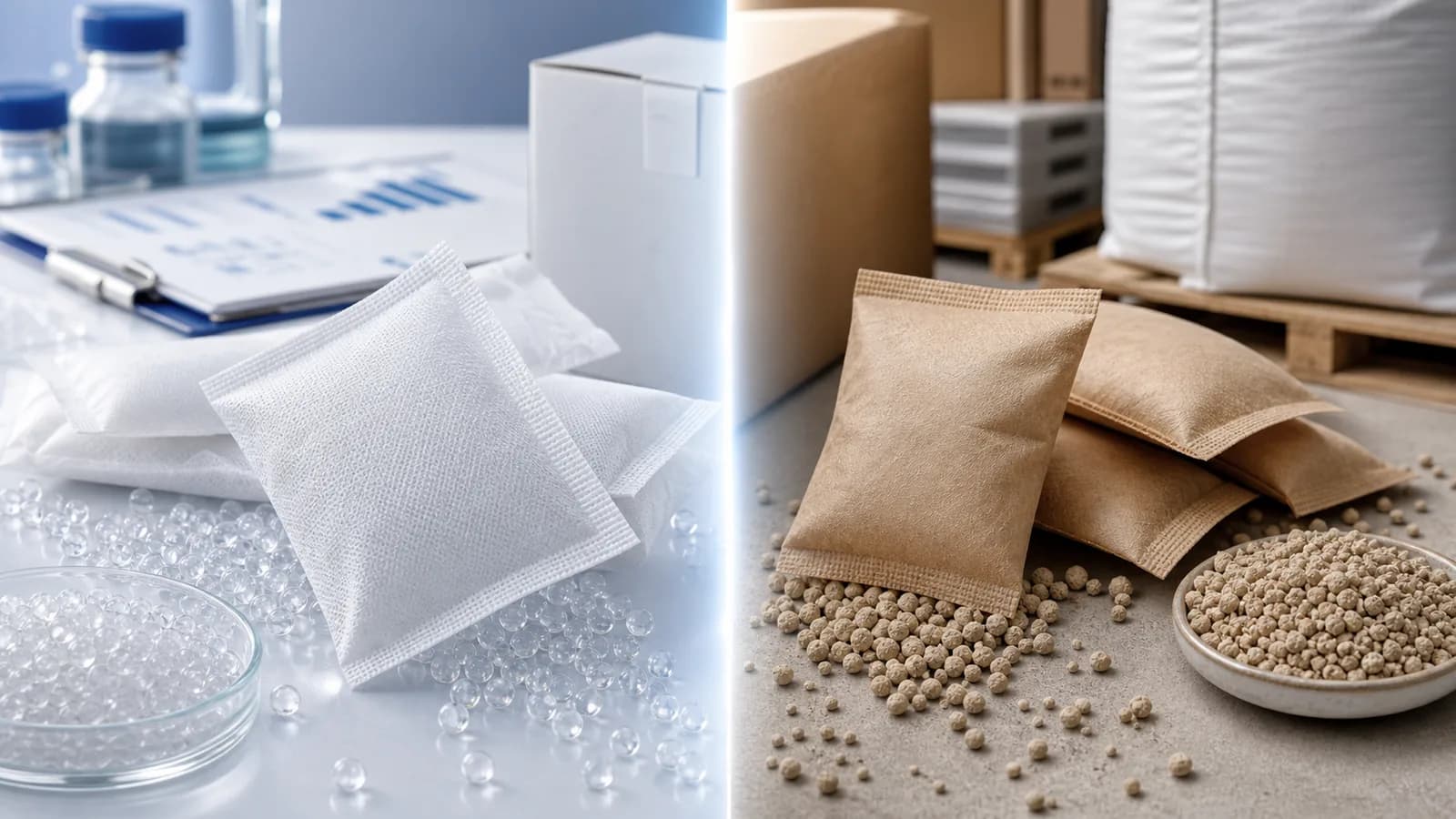
Silica Gel
Silica gel (silicon dioxide) is the global industrial standard for moisture control: ~30-35% adsorption capacity by weight, broad temperature range, regenerable, and the default choice for pharma, electronics, and high-value packaging.
Dry Clay Desiccant
Dry clay desiccant (montmorillonite/bentonite clay) is a naturally occurring mineral with ~25% adsorption capacity by weight, lower cost per kg, and a temperature ceiling around 50 degrees Celsius. It's the cost-leader for high-volume container loadings and warehouse stock.
Specification comparison
| Criterion | Silica Gel | Dry Clay Desiccant |
|---|---|---|
| Adsorption capacity (by weight) | 30-35% | Up to 25% |
| Working temperature ceiling | Up to 150°C | ~50°C |
| Regenerable | Yes (120-150°C, 2-4h) | Limited - single-use is standard |
| Cost per kg of material | Reference | 20-35% lower than silica gel |
| Regulatory profile | Inert SiO₂; SDS + COA available | Inert mineral; SDS + COA available |
| Best-fit cargo | Pharma, electronics, leather, precision goods | Bulk container loadings, warehouse stock, cost-tier industrial |
| Indicating-color option | Orange (REACH) or blue (legacy) | Not typically available |
| Documentation held | ISO 9001:2015 + DMF-free | ISO 9001:2015 |
Which one to choose
Decision matrix by scenario. Match the buyer's cargo type to the recommended product.
Buyer FAQ
Is dry clay desiccant cheaper than silica gel?
Per kg of material, dry clay desiccant is typically 20-35% cheaper than equivalent-grade silica gel. The total cost-per-cargo also depends on capacity differences (silica gel does more work per gram), so the sizing math matters when comparing.
Can I substitute clay desiccant for silica gel in pharma packaging?
Not for direct-contact or regulated pharma packaging. Clay desiccant is appropriate for non-pharma industrial applications. Pharma packaging desiccant requires specific regulatory documentation (region-specific) that silica gel suppliers typically support and clay typically does not.
Does DryGelWorld supply both silica gel and dry clay desiccant?
Yes - both are in the catalog with ISO 9001:2015 manufacturer certification. Format options for clay include sachets, strips, and bulk paper bags. Choice between the two is a per-cargo decision based on the criteria above.
Which is REACH-compliant?
Both base materials are inert and contain no REACH-restricted substances. The relevant REACH consideration is the indicator dye (if any) on indicating silica gel - DryGelWorld's orange indicating gel uses a non-cobalt-chloride dye that avoids the restricted substance. A formal REACH registration is the EU importer's obligation and is not held by DryGelWorld.
Next step
Talk to the Dry Gel World export desk about which product fits your specific cargo, volume, and destination market. Standard documentation (ISO 9001:2015, SDS, COA, DMF-free statement) ships with every quote.