
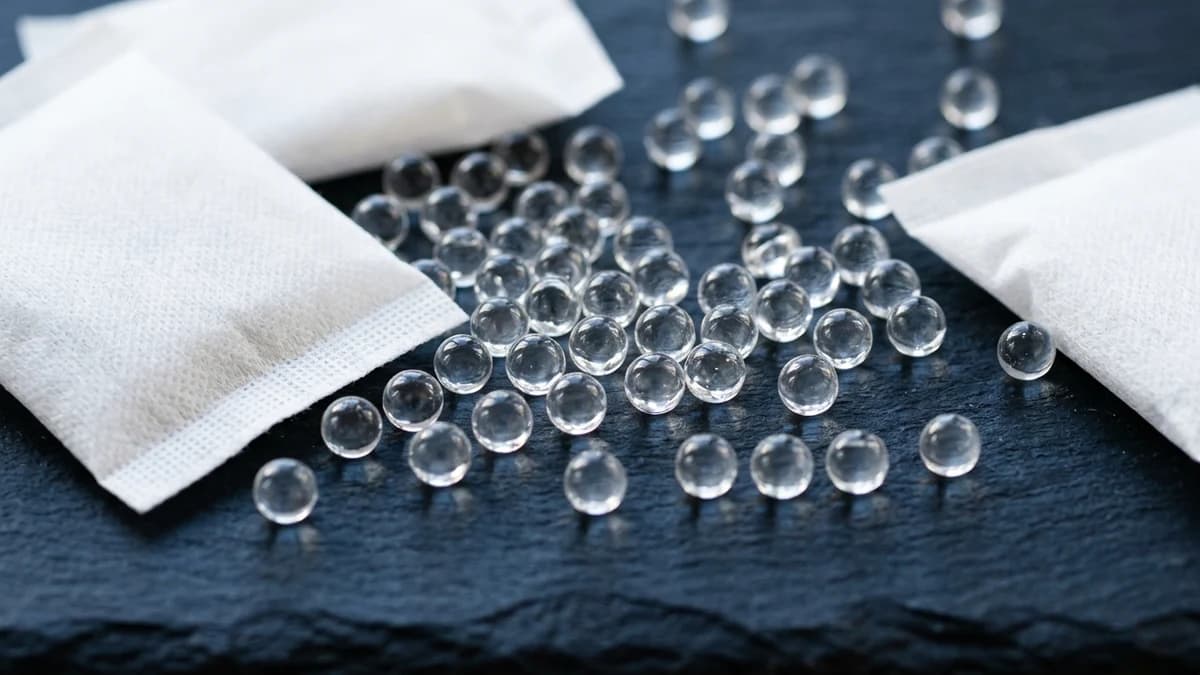

Silica gel is a porous desiccant, not a gel-like liquid
A silica gel packet is a small permeable sachet holding beads of silicon dioxide, tucked in beside a product to keep the air around it dry. The beads do the work; the sachet only holds them and lets water vapour pass through. Silica gel itself is a solid, porous form of silicon dioxide used to adsorb water vapor from the air around a packed product. Buyers often see it in small white sachets, clear beads, indicating beads, bulk bags, and container desiccant formats. The important point for packaging teams is simple: silica gel does not protect a shipment by touching the product directly; it protects by reducing moisture in the small air space around the product, carton, pouch, case, or container zone where it is placed.
- Use silica gel packets inside product boxes, pouches, cartons, bottles, and accessory packs.
- Use larger bags or bulk formats for cartons, bins, storage, repacking, and warehouse programs.
- Use container strips or cargo desiccants when the risk is container condensation, not only product packaging humidity.
Adsorption happens on internal surface area
Silica gel works through adsorption, which means water vapor attaches to the internal pore surfaces of the bead. This is different from absorption, where liquid is taken into a material like a sponge. For buyers, the difference matters because desiccant performance depends on bead quality, packet material, airflow, package volume, humidity exposure, and how much moisture must be controlled during storage or transit.
- A sealed pouch, carton, or case lets a small packet work more efficiently than an open environment.
- A weak packaging barrier, long storage time, or humid destination usually needs a higher dosage.
- A desiccant quote should start with package size, product sensitivity, route, and expected exposure time.
The packet material matters as much as the bead
Procurement teams sometimes compare only silica gel weight, but the sachet material and seal quality also matter. A packet must allow vapor to pass through while keeping beads contained, clean, and safe for handling. For private-label or regulated packaging, the packet also has to carry correct warning text, batch identification, and buyer-approved wording.
- Common options include breathable paper, technical fiber, and non-woven packet formats.
- Low-dust and clean-pack presentation matters for electronics, pharma support packaging, and retail goods.
- Private-label packets should confirm wording such as SILICA GEL, DESICCANT, DO NOT EAT, and THROW AWAY.
Silica gel buying should match the protection level
A small 1g sachet, a 100g bag, and a container strip solve different moisture problems. The most common mistake is asking for a generic silica gel price without explaining where the desiccant will sit. A better RFQ describes the product, carton, packing material, destination, shipment route, and required documents.
- For small packages, request packet size guidance by product and carton volume.
- For bulk procurement, request loose beads, finished bags, pallet packing, or repeat monthly supply clearly.
- For export containers, request route-based planning for 20ft or 40ft containers.
References
- Silica (silicon dioxide, SiO2) — compound summary, CID 24261 , National Institutes of Health (PubChem)
- Silica — ToxFAQs , Agency for Toxic Substances and Disease Registry (CDC)
- 3: The Langmuir Isotherm , Chemistry LibreTexts
- NWS Glossary — Relative humidity , NOAA National Weather Service
- DIN 55473:2021-07 — Auxiliary means of packaging - Desiccant in bag - Technical delivery conditions , DIN Media (German Institute for Standardization)