
Calcium chloride vs molecular sieve: container absorber vs deep-drying desiccant
Compare calcium chloride and molecular sieve for moisture control: container cargo uptake, low-humidity drying, regeneration, cost, and buyer fit.
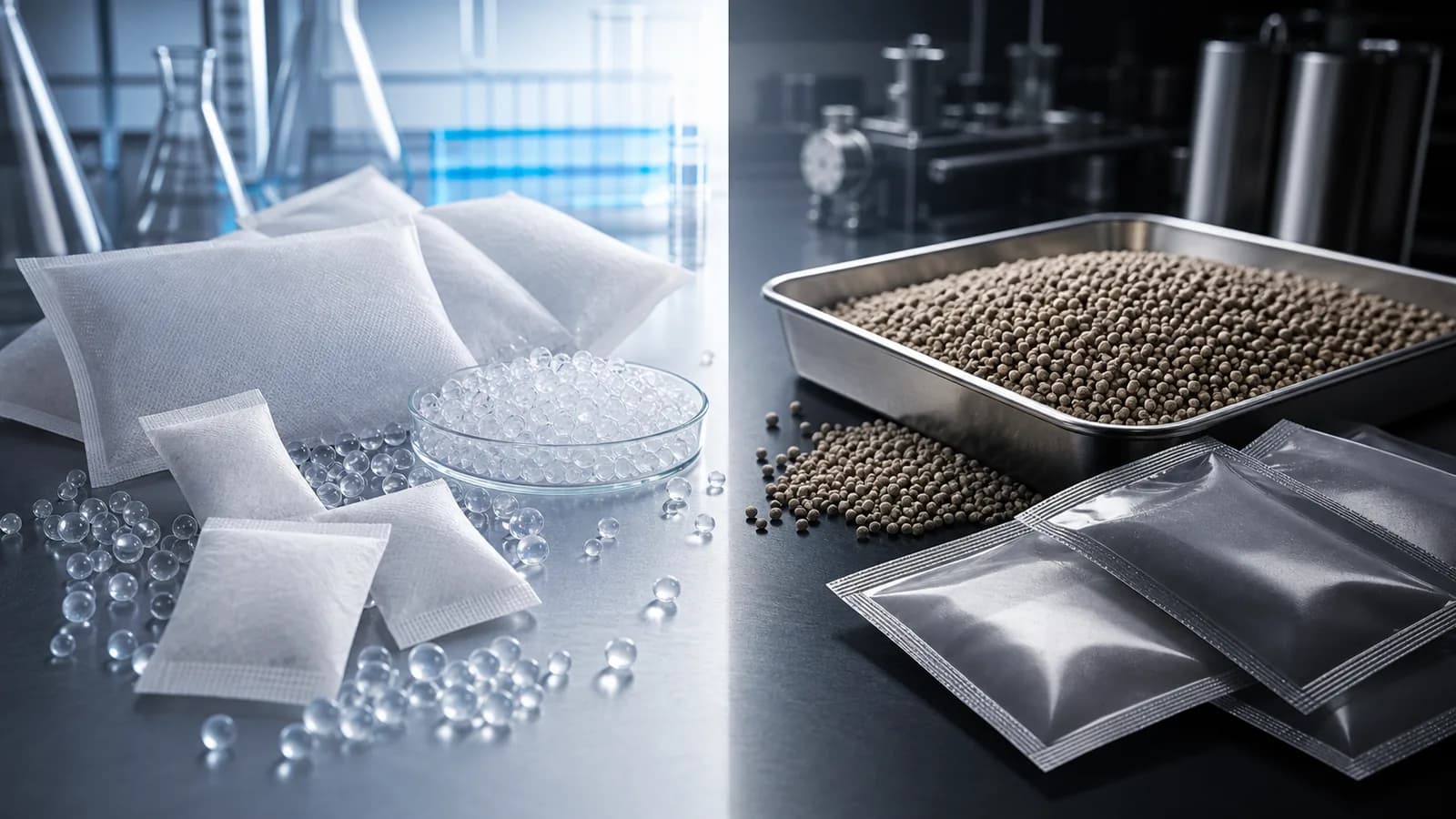
Calcium Chloride
Calcium chloride is chosen for high-moisture container environments where the goal is absorbing large amounts of water vapor during transport.
Molecular Sieve
Molecular sieve is a synthetic zeolite chosen for deep drying, selective adsorption, and very low humidity endpoints in technical systems.
Specification comparison
| Criterion | Calcium Chloride | Molecular Sieve |
|---|---|---|
| Primary job | High-volume container moisture absorption | Deep drying to very low humidity |
| Mechanism | Deliquescent absorption | Selective adsorption by pore size |
| End state | Contained brine/gel | Dry solid beads/pellets |
| Regeneration | No | Yes, high-temperature regeneration |
| Cost | Moderate for container duty | High compared with common desiccants |
| Best use | Shipping containers | Insulated glass, gas drying, refrigerants, technical systems |
| Packaging fit | Strips and bulk bags | Canisters, beads, cartridges |
Which one to choose
Decision matrix by scenario. Match the buyer's cargo type to the recommended product.
Buyer FAQ
Is molecular sieve good for shipping containers?
Usually no. It is too expensive and too specialized for general container moisture control.
Which reaches lower humidity?
Molecular sieve reaches much lower humidity endpoints.
Which absorbs more water in a container?
Calcium chloride is normally more practical for high-moisture container uptake.
Can molecular sieve be reused?
Yes, with high-temperature regeneration. Calcium chloride is normally single-use.
Does DryGelWorld supply molecular sieve?
Molecular sieve is not a core DryGelWorld catalog item; calcium chloride pages are quote-only.
Next step
Talk to the Dry Gel World export desk about which product fits your specific cargo, volume, and destination market. Standard documentation (ISO 9001:2015, SDS, COA, DMF-free statement) ships with every quote.