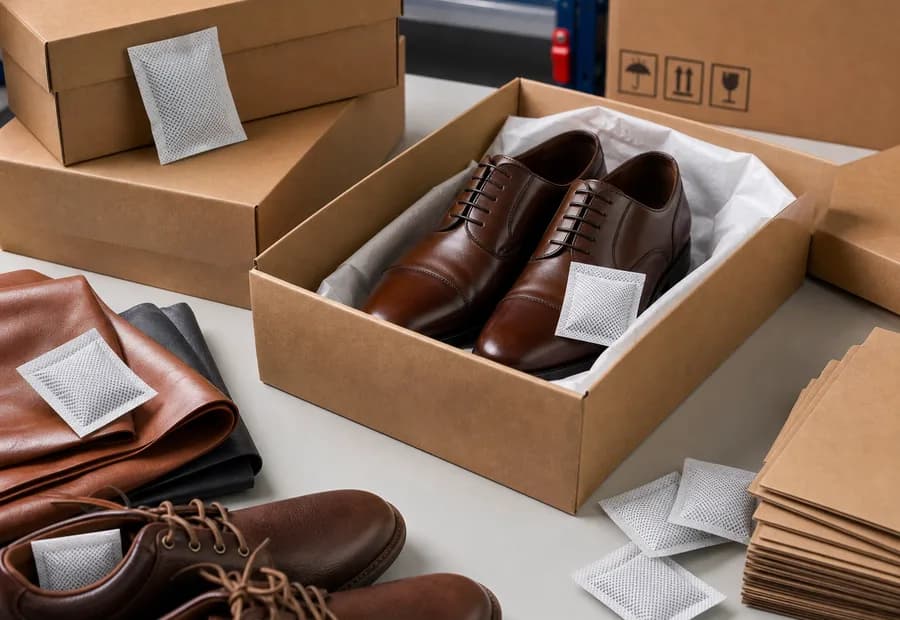
The team was choosing sachet sizes order by order, which made RFQs slower and created uncertainty around carton-level and container-level protection.
Approach
The request was structured around carton size, product sensitivity, destination climate, route humidity, packet size, container strip option, and document requirements.
Proof Path
The buyer request path emphasized SDS, COA, DMF-free support, MOQ, packing quantity, carton placement, and export route details before price negotiation.
Outcome
The buyer could send clearer RFQs with size, quantity, route, and document needs aligned before final quotation.
Buyer-safe note
This anonymous case study describes the procurement workflow and RFQ structure. Client names, shipment references, and private commercial details are not shown.
Anonymized referenceLeather & footwear exporterThis buyer is referenced anonymously. A named reference will replace this once written permission is granted.
Related Products
Move from case study to quote path.
These links connect the case study to product pages, comparison pages, documents, and RFQ routes so buyers can continue from proof into procurement.