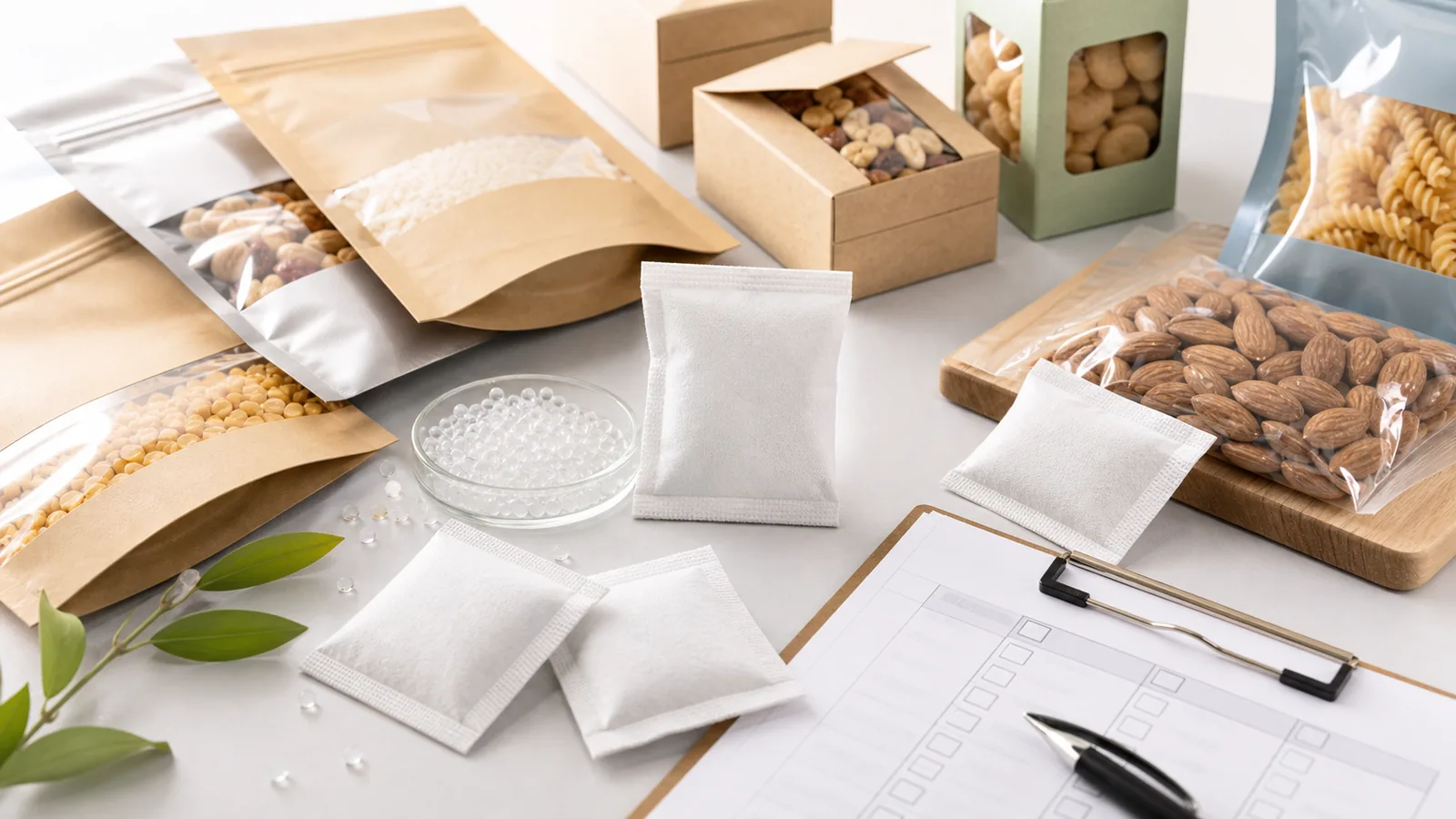
The buyer wanted food packaging language, but the export desk needed the exact packet material, warning text, destination, and documents clarified before any claim was used.
Approach
The inquiry was framed around white non-indicating silica gel, packet size, package layer, direct vs indirect contact, SDS, COA, material statements, destination, and label wording.
Proof Path
The RFQ checklist separated real document support from marketing wording, reducing the risk of unsupported claims in buyer packaging.
Outcome
The buyer received a clearer path for packaging review, document approval, and final quote inputs.
Buyer-safe note
This anonymous case study describes the procurement workflow and RFQ structure. Client names, shipment references, and private commercial details are not shown.
Anonymized referenceFood packaging buyerThis buyer is referenced anonymously. A named reference will replace this once written permission is granted.
Related Products
Move from case study to quote path.
These links connect the case study to product pages, comparison pages, documents, and RFQ routes so buyers can continue from proof into procurement.