
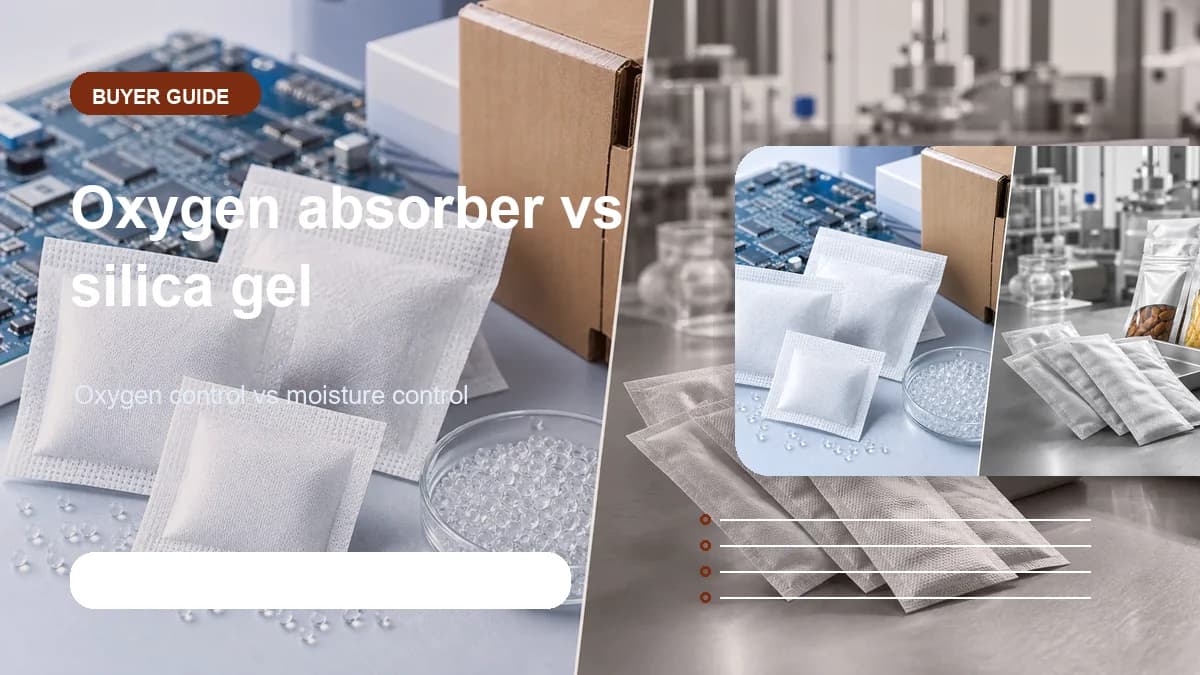
Oxygen absorbers and silica gel are not substitutes
The most common B2B buying mistake in moisture and atmosphere control: treating oxygen absorbers and silica gel as interchangeable. They are not. Silica gel adsorbs water vapor (humidity) and protects against moisture damage - corrosion, mold, mildew, electrical short-circuit, leather and electronics damage. Oxygen absorbers consume oxygen (O₂) and protect against oxidation damage - fat rancidity in food, browning in seeds and grains, color loss in some pigments, and limited oxidative damage in specific electronics. They work on entirely different chemistry. Buyers who substitute one for the other will protect against the wrong damage type and the cargo will fail QC at destination.
- Silica gel: removes water vapor (humidity). Protects against moisture damage.
- Oxygen absorber: removes O₂. Protects against oxidation damage.
- Different chemistry, different damage types.
- Substituting one for the other = wrong protection = cargo QC failure.
When silica gel is the right choice (most B2B shipping)
Silica gel is the correct desiccant for: electronics packaging (PCB corrosion, condensation on cold-soaked surfaces), leather and footwear (mold and mildew prevention on long-haul humid routes), pharmaceutical packaging where moisture stability is the documented degradation pathway, textile and garment export from humid origin markets, metal-component shipping (corrosion prevention), and the vast majority of container desiccant applications. If the failure mode the buyer is protecting against involves water, moisture, humidity, or condensation - silica gel is the answer.
- Electronics: PCB corrosion, condensation on cold-soaked surfaces.
- Leather/footwear: mold and mildew on long humid routes.
- Pharma (moisture-degradation pathway): silica gel-applicable.
- Textile/garment: long-haul from humid origins.
- Metal components: corrosion prevention.
- Most container desiccant applications.
When oxygen absorbers are the right choice (food, seeds, pharma)
Oxygen absorbers are the correct choice for: fat-containing food packaging (nuts, snacks, pet food, meat snacks) where oxidative rancidity is the failure mode; long-shelf-life dry food packaging where browning and flavor degradation matter (coffee, dried fruit, spices); seed packaging where germination depends on slow-down of oxidative respiration; certain pharmaceutical actives that oxidize rather than hydrolyze; and specific archival or museum applications where oxygen-driven yellowing or color shift matters. Oxygen absorbers usually ship sealed inside the buyer's primary packaging - they need a near-airtight enclosure to work effectively, and they're 'consumed' as they react with available oxygen.
- Fat-containing food: nuts, snacks, pet food, meat snacks.
- Long-shelf-life dry food: coffee, dried fruit, spices.
- Seeds (germination preservation).
- Pharma actives that oxidize rather than hydrolyze.
- Archival/museum applications: yellowing prevention.
- Requires near-airtight enclosure to work.
When you need both - and the order matters
Several categories need both desiccant and oxygen absorber together: long-shelf-life packaged food (humidity AND oxidative rancidity are both failure modes), some pharmaceutical packaging (moisture stability + oxidation stability both relevant), preserved museum/archival items (slow both moisture and oxidative degradation), specialty seed packaging for very long-term storage. Important order: silica gel goes in FIRST during packaging, oxygen absorber LAST just before sealing. Reason: oxygen absorber begins working the moment air touches it; once it's in the package, you have limited time before it's spent. Silica gel doesn't have that time pressure. Buyers who put oxygen absorber in first and then dawdle while loading silica gel sachets find their oxygen absorbers half-spent before the package is even sealed.
- Both: long-shelf-life food, dual-pathway pharma, preserved archival items.
- Order: silica gel FIRST during packaging.
- Oxygen absorber LAST just before sealing.
- Reason: O₂ absorber starts reacting immediately on air contact.
- Wrong order = O₂ absorber half-spent before package sealed.
Why oxygen absorbers don't replace silica gel on shipping containers
Container desiccant is an obvious 'maybe oxygen absorbers can do this' candidate for buyers new to the category - but the answer is no. Shipping container failure modes are dominated by humidity, condensation cycling, and 'container rain', not oxidation. The container is not airtight enough for oxygen absorbers to maintain a low-O₂ atmosphere, and even if it were, oxidation isn't the dominant cargo damage in most cargo types. Silica gel container strips and bulk silica gel are the correct moisture control choice for shipping containers across virtually all cargo categories. Oxygen absorbers belong inside individual food or pharma primary packages, not at the container level.
- Container damage: humidity, condensation, container rain - not oxidation.
- Containers are not airtight enough for O₂ absorbers to maintain low-O₂.
- Silica gel strips + bulk silica gel = correct container choice.
- O₂ absorbers belong inside individual primary packages, not at container level.
DryGelWorld scope: silica gel and clay, not oxygen absorbers
An honest scope clarification: DryGelWorld supplies silica gel (sachets, container strips, bulk beads) and dry clay desiccant. Oxygen absorbers are NOT in the current catalog. Buyers needing oxygen absorbers for food, pharma, or seed packaging should source them from specialized oxygen-absorber manufacturers (Mitsubishi Ageless and similar). Buyers needing combined moisture + oxygen control should source the two products in parallel. DryGelWorld can advise on silica gel sizing for the moisture side of a combined program; oxygen absorber sizing is the specialist supplier's call.
- DryGelWorld supplies: silica gel sachets, container strips, bulk beads, dry clay.
- NOT in catalog: oxygen absorbers.
- Food/pharma/seed buyers needing O₂ absorbers: source separately from specialist.
- Combined moisture + O₂ programs: parallel-source the two products.
- DryGelWorld can advise silica gel side of combined programs; O₂ specialist advises their side.