
Silica gel vs oxygen absorber: buyer comparison
Comparison of silica gel and oxygen absorbers - what each one protects against, when to use which, and the cases where buyers need both products in parallel inside the same package.
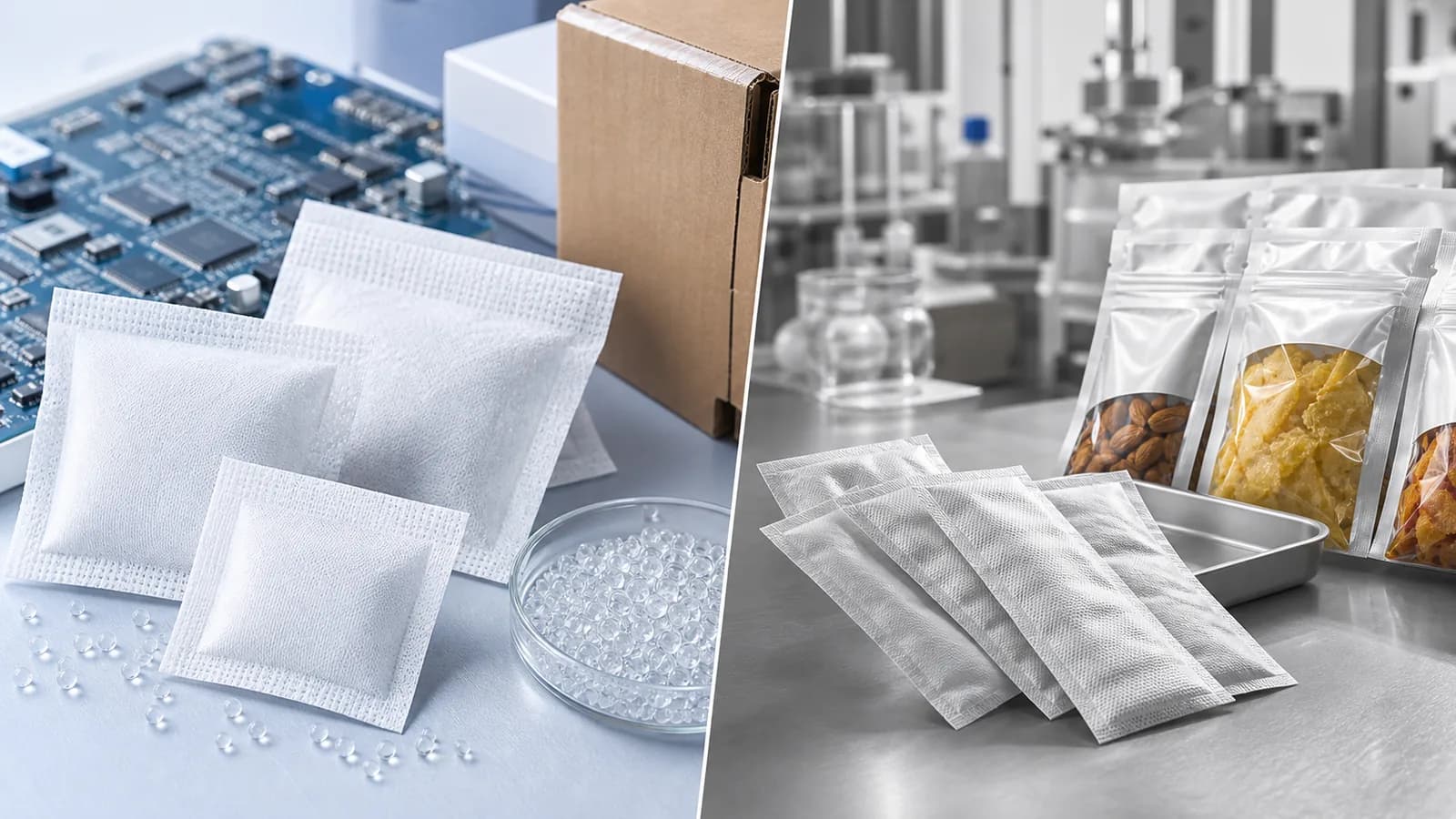
Silica Gel
Silica gel adsorbs water vapor (humidity). It protects against moisture-driven damage: corrosion, mold, mildew, condensation on cold surfaces, leather damage, electronics short-circuit risk.
Oxygen Absorber
Oxygen absorbers consume atmospheric oxygen (typically via iron oxidation). They protect against oxidation-driven damage: rancidity in fatty foods, browning in dried foods, color loss in pigments, certain pharmaceutical oxidative degradation pathways.
Specification comparison
| Criterion | Silica Gel | Oxygen Absorber |
|---|---|---|
| What it removes | Water vapor | Oxygen (O₂) |
| Protects against | Moisture damage | Oxidation damage |
| Reaction speed | Gradual adsorption | Begins immediately on air contact |
| Reusable | Yes - regenerable at 120-150°C | No - single-use consumable |
| Required enclosure | Tolerates breathable packaging | Requires near-airtight enclosure |
| Typical applications | Packaging, container desiccant, warehouse stock | Long-shelf-life food, fatty foods, seeds, archival |
| Documentation held by DryGelWorld | ISO 9001:2015 + DMF-free + SDS + COA | Not in DryGelWorld catalog |
Which one to choose
Decision matrix by scenario. Match the buyer's cargo type to the recommended product.
Buyer FAQ
Can silica gel replace oxygen absorbers in fatty food packaging?
No. Fatty foods go rancid through oxidation, not moisture. Silica gel won't prevent rancidity. Use oxygen absorbers; add silica gel separately if humidity is also a concern.
Can oxygen absorbers replace silica gel in shipping containers?
No. Container damage is dominated by humidity and condensation cycling; containers aren't airtight enough for O₂ absorbers to maintain low-O₂ atmosphere. Use silica gel container strips and bulk silica gel.
Do silica gel and oxygen absorbers interfere with each other?
No, they work on different chemistry. When using both in the same package, order matters: place silica gel sachets first, then oxygen absorbers last just before sealing - because O₂ absorbers start working immediately on air contact.
Does DryGelWorld supply oxygen absorbers?
No - oxygen absorbers are not in the current catalog. Buyers needing both should parallel-source from a specialized O₂ absorber manufacturer (Mitsubishi Ageless and similar) and source silica gel from DryGelWorld.
Next step
Talk to the Dry Gel World export desk about which product fits your specific cargo, volume, and destination market. Standard documentation (ISO 9001:2015, SDS, COA, DMF-free statement) ships with every quote.