
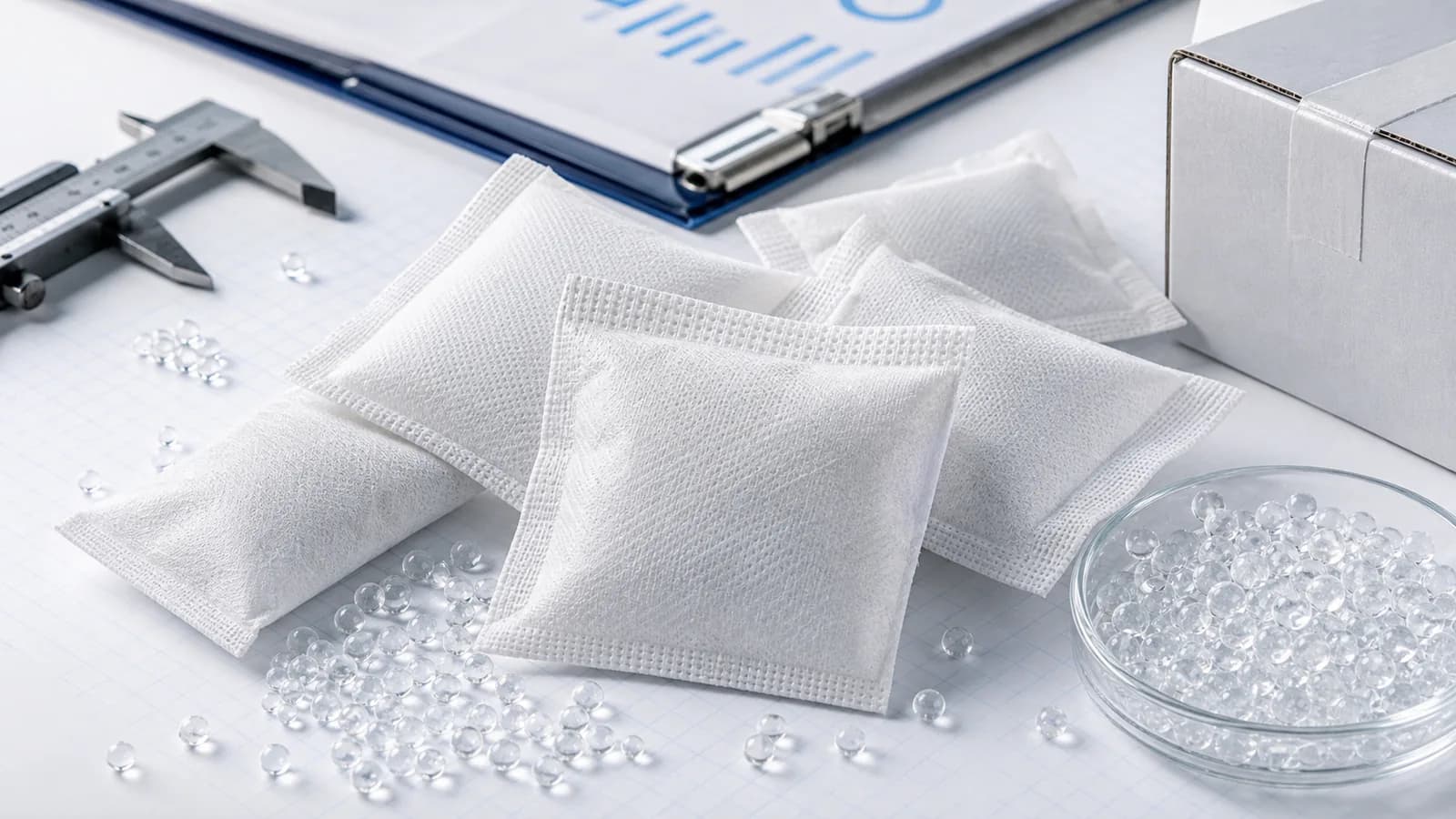
Short answer: standard silica gel is non-toxic
Plain silica gel is amorphous silicon dioxide (SiO2) - chemically inert, non-flammable, and non-toxic in the poisonous sense. It does not react with the products it protects, which is exactly why it is the default desiccant for food, pharma, electronics, and leather export. The familiar 'DO NOT EAT' warning is not because the gel is poison; it is because the beads are a choking hazard, they are not food, and swallowing them serves no purpose. DryGelWorld supplies standard non-indicating silica gel that is safe for incidental contact in B2B packaging.
- Standard silica gel = amorphous SiO2: inert, non-toxic, non-flammable.
- 'DO NOT EAT' = choking/not-food warning, not a poison warning.
- Inert chemistry is why it is the default desiccant across industries.
- Safe for incidental contact in food, pharma, and electronics packaging.
The important distinction: amorphous vs crystalline silica
Buyers sometimes confuse desiccant silica gel with crystalline silica, and the safety profiles are completely different. Crystalline silica (respirable quartz dust, as found in cutting stone, concrete, or sandblasting) is a recognised occupational hazard linked to silicosis on long-term inhalation. Desiccant silica gel is amorphous, not crystalline - it does not carry the same silicosis classification. The only real airborne concern with desiccant gel is ordinary nuisance dust from broken beads, which is managed with basic ventilation and not inhaling the powder. Always read the SDS for the exact grade you are buying.
- Crystalline silica (quartz dust): occupational silicosis hazard.
- Desiccant silica gel: amorphous - not the same classification.
- Real-world airborne concern is nuisance bead dust only.
- Confirm grade and hazard statements on the product SDS.
Indicating gel: the cobalt-chloride question
The one place a genuine toxicity question arises is indicating (colour-changing) silica gel. Traditional blue indicating gel uses cobalt(II) chloride, classified in the EU as a Category 1B carcinogen and restricted in several markets. Modern orange indicating gel typically uses safer cobalt-free indicators. If your destination market or end-use is regulated, specify cobalt-free orange indicating gel, or use plain non-indicating gel and verify desiccant performance by sizing math and sample testing instead. State the requirement at quote stage so the right grade is supplied from the start.
- Blue indicating gel often uses cobalt chloride (restricted in some markets).
- Orange indicating gel is commonly cobalt-free and safer.
- Regulated end-use → specify cobalt-free or non-indicating gel.
- Declare the requirement in the RFQ, not after shipment.
Worker handling and packing-line safety
For packing teams handling silica gel sachets in volume, the precautions are simple and low-cost. Work in a ventilated area so any fine dust from damaged sachets disperses; avoid rubbing eyes with dusty hands; and wash hands before eating. The gel is a strong desiccant, so prolonged skin contact with loose beads can feel drying - gloves solve this for high-volume loose-fill operations. No special respiratory equipment is needed for intact sachets in normal packing work. Keep an SDS on the floor so supervisors can answer worker questions quickly.
- Ventilate the area; avoid inhaling dust from broken sachets.
- Don't rub eyes with dusty hands; wash hands before eating.
- Gloves for high-volume loose-bead handling (drying effect).
- Intact sachets need no respirator in normal packing work.
- Keep the SDS accessible on the packing floor.
Food contact, pets, and 'someone swallowed a packet'
For food packaging, plain silica gel is widely used because incidental contact is considered low risk; food-grade documentation is a separate compliance question handled at procurement, not a sign the gel is otherwise unsafe. If a person or pet swallows a small non-indicating sachet, the realistic risk is choking or mild stomach upset and dryness rather than poisoning - standard advice is to stay calm, remove any remaining sachet, drink water, and seek medical or veterinary advice if symptoms persist or if the sachet was a large or indicating type. This is exactly why the beads carry the keep-away-from-children warning.
- Plain gel is widely used in food packaging (incidental contact, low risk).
- Food-grade compliance is a documentation step, not a safety red flag.
- Swallowed small sachet: choking/dryness risk, not poisoning.
- Indicating or large sachets ingested → seek medical/vet advice.
- Keep sachets away from children and pets.
Disposal, reuse, and shipping classification
Used non-indicating silica gel is generally non-hazardous waste and can go to normal landfill; many operations instead reactivate it by drying the beads in an oven to restore adsorption capacity. For freight, standard silica gel is chemically stable and classed as non-dangerous goods, so it does not require dangerous-goods documentation for air or sea - confirm the exact line entry with your forwarder. For indicating grades, follow local rules for the specific indicator used. Request the SDS from DryGelWorld at quote stage so your customs broker and EHS team have it on file before the first shipment.
- Used plain gel: typically non-hazardous landfill waste.
- Reactivate by oven-drying to reuse adsorption capacity.
- Standard gel ships as non-dangerous goods (confirm with forwarder).
- Indicating grades: follow rules for the specific indicator.
- Get the SDS at quote stage for customs and EHS files.
References
- Silica gel: is it dangerous to eat? , National Capital Poison Center (Poison Control)
- Silicon dioxide, compound summary , PubChem, U.S. National Library of Medicine