
Silica gel vs activated carbon: moisture control vs odor and gas adsorption
Comparison of silica gel and activated carbon - silica gel removes water vapor (humidity), activated carbon removes odors and volatile organic compounds. What each protects against, and why they are complements, not substitutes.
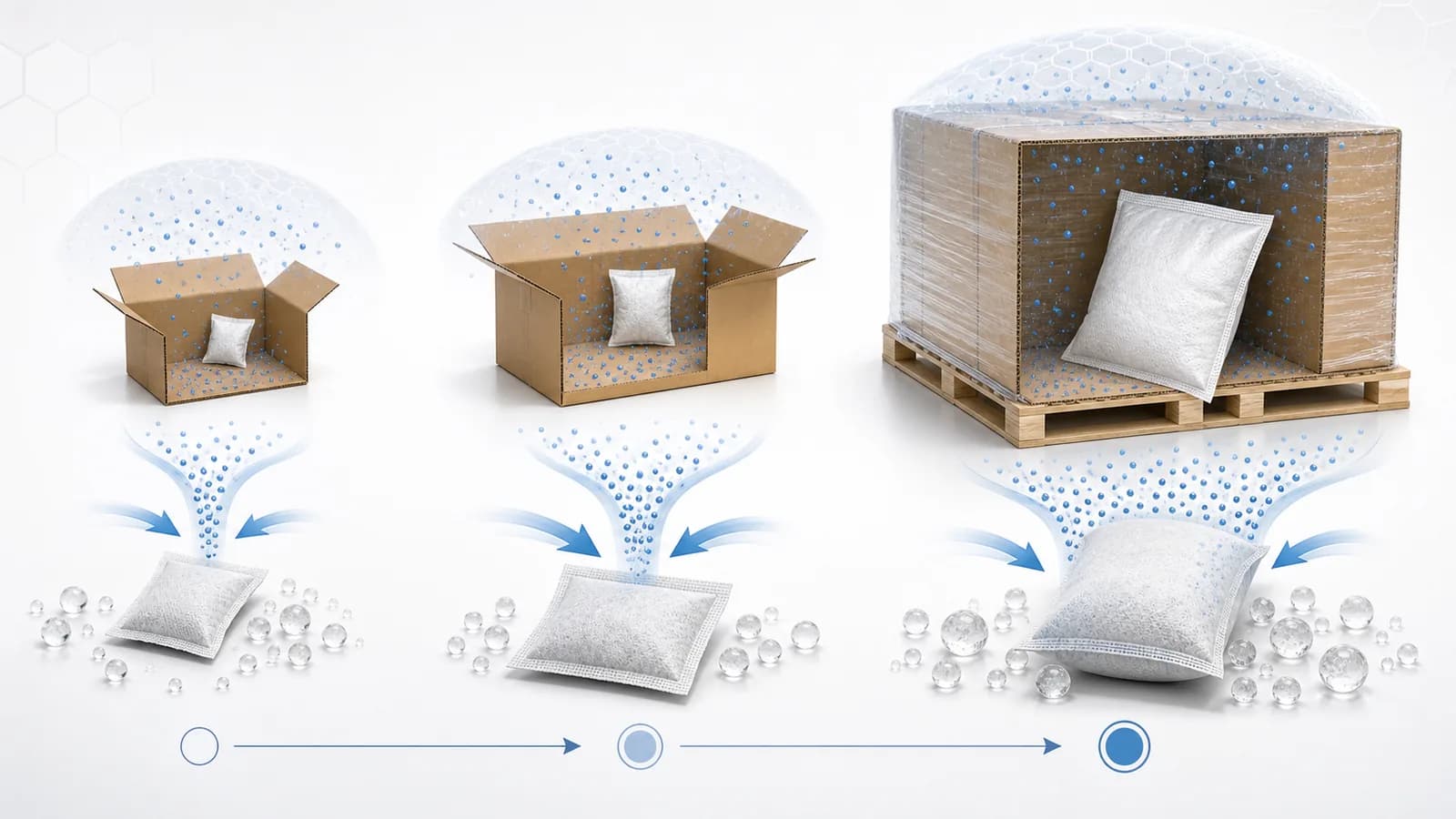
Silica Gel
Silica gel adsorbs water vapor. It is the moisture control tool: it protects against corrosion, mold, mildew, condensation, and humidity damage in packaging, containers, electronics, leather, and warehouse stock. It does little for smells or gases.
Activated Carbon
Activated carbon (activated charcoal) adsorbs odors, volatile organic compounds (VOCs), and many gases via its enormous microporous surface area. It is the odor/gas-control tool, used in air and water filtration, odor management, and off-gassing control. It does relatively little to lower humidity. Activated carbon is NOT in the DryGelWorld catalog.
Specification comparison
| Criterion | Silica Gel | Activated Carbon |
|---|---|---|
| What it removes | Water vapor (humidity) | Odors, VOCs, many gases |
| Protects against | Moisture damage (corrosion, mold, mildew) | Smells, off-gassing, certain gas contaminants |
| Effect on humidity | Strong - this is its job | Minimal |
| Effect on odor | Minimal | Strong - this is its job |
| Regenerable | Yes (120-150°C) | Yes, but conditions differ by application |
| Typical use | Packaging, container, warehouse moisture control | Air/water filters, odor control, off-gassing |
| In DryGelWorld catalog | Yes (ISO 9001:2015 + DMF-free) | No - source from an activated carbon specialist |
Which one to choose
Decision matrix by scenario. Match the buyer's cargo type to the recommended product.
Buyer FAQ
Is activated carbon the same as silica gel?
No. They are different materials solving different problems. Silica gel adsorbs water vapor (humidity control). Activated carbon adsorbs odors, VOCs, and gases (odor/gas control). They are complements, not substitutes - using one where you need the other will not work.
Can activated carbon replace silica gel for moisture control?
No. Activated carbon has high surface area but is not optimized to hold water vapor the way silica gel is, so it does little to lower humidity. For moisture protection in packaging, containers, or storage, use silica gel or clay desiccant.
Does DryGelWorld supply activated carbon?
No - activated carbon is not in the DryGelWorld catalog. DryGelWorld supplies silica gel and clay desiccants under ISO 9001:2015 + DMF-free. Buyers needing combined moisture-plus-odor protection can source carbon from a specialist and silica gel from DryGelWorld.
When would I use both silica gel and activated carbon?
When a shipment has both a humidity problem and an odor/off-gassing problem - for example new leather goods, or sealed packs that develop VOC smells. Silica gel controls the moisture; activated carbon captures the odors and gases. Place both in the package per their separate dosing guidance.
Which is better for a musty smell in stored goods?
A musty smell usually has two causes: active humidity (use silica gel to stop mold/mildew at the source) and already-present odor molecules (use activated carbon to adsorb them). Address the humidity first with silica gel, then use activated carbon to clear residual odor.
Next step
Talk to the Dry Gel World export desk about which product fits your specific cargo, volume, and destination market. Standard documentation (ISO 9001:2015, SDS, COA, DMF-free statement) ships with every quote.