
Silica gel vs calcium chloride container desiccant
Compare silica gel and clay versus calcium chloride container desiccants for container rain: capacity, gel/leak risk, dosing, cost, and cargo fit.
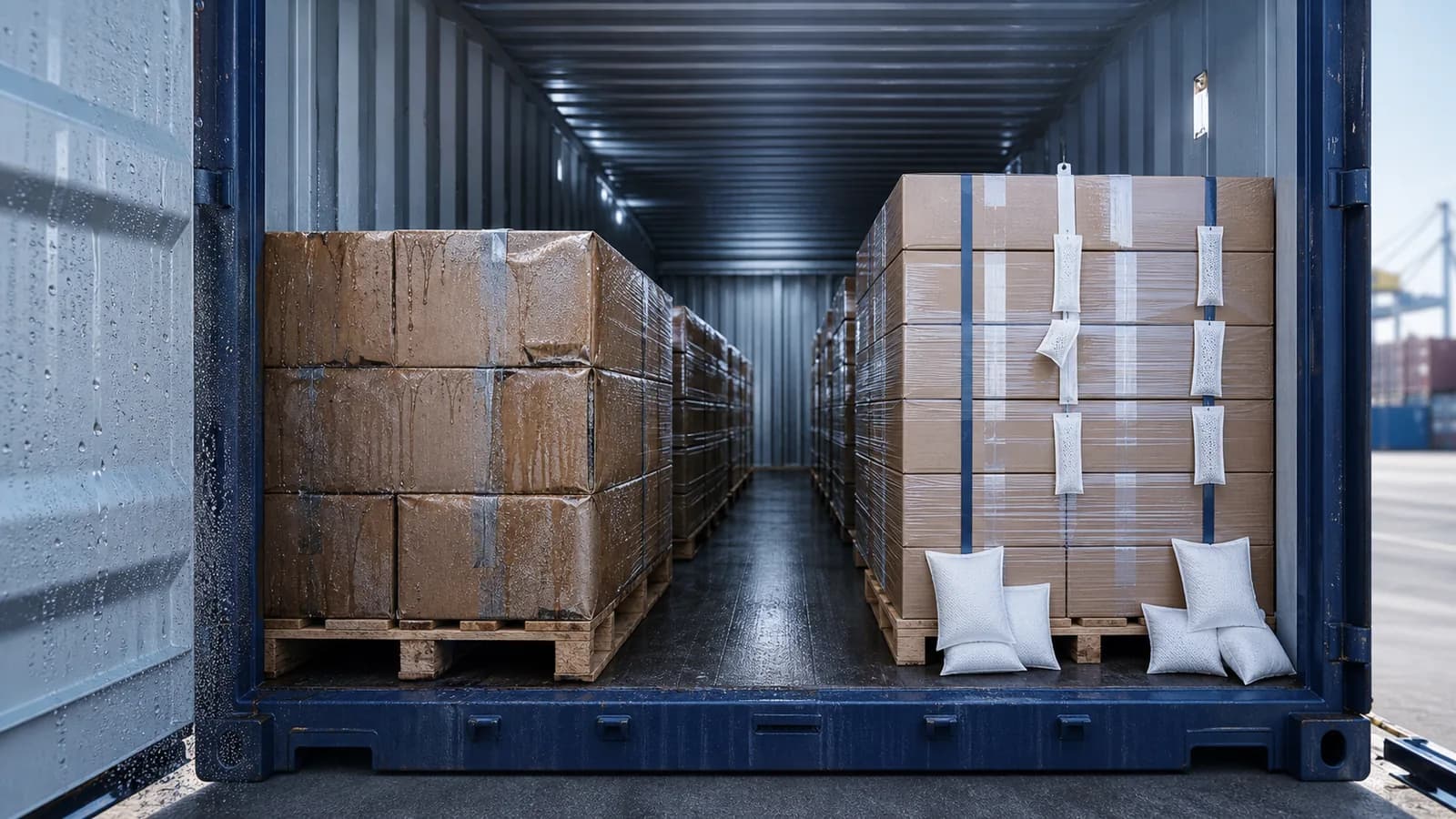
Silica Gel / Clay Container Desiccant
Silica gel and clay container strips are adsorbing desiccants: they hold water vapor inside a porous structure (silica gel up to ~33% of its weight, clay up to ~25%) without changing into a liquid. They are the standard for protecting moisture-sensitive cargo (leather, electronics, textiles, packaged goods) where any free liquid near the cargo is unacceptable. DryGelWorld supplies both as 1-5 kg hanging cargo strips and bulk.
Calcium Chloride Container Desiccant
Calcium chloride container desiccants (the AbsorbKing / Container Dri II style product) are deliquescent: the salt pulls in far more than its own weight in water - often 150-300% - and converts it into a thick gel held inside a leak-resistant pouch. They are engineered specifically for high-volume container rain on long tropical voyages. DryGelWorld supplies calcium chloride container strips and bulk bags alongside its silica gel and clay strips, so this comparison is about picking the right tool for the cargo, not about steering buyers to one format. Where silica gel wins is stated first: zero free liquid, regenerable, and the safer choice for anything that cannot tolerate brine.
Specification comparison
| Criterion | Silica Gel / Clay Container Desiccant | Calcium Chloride Container Desiccant |
|---|---|---|
| Mechanism | Adsorption (vapor held in solid pore structure) | Deliquescence (vapor converted to liquid/gel) |
| Water capacity (by own weight) | Silica gel ~33%, clay up to ~25% | 150-300% - far higher per gram |
| End state when saturated | Stays solid; no free liquid | Becomes a contained gel/brine inside the pouch |
| Leak risk near cargo | None - solid stays solid | Low if pouch intact; brine damages cargo if a pouch fails |
| Best voyage length | Short to medium hauls; carton + container layering | Long tropical-to-temperate hauls (25-40+ days) |
| Regenerable | Silica gel yes (120-150°C); clay typically single-use | No - single-use consumable |
| Cost per unit | Lower per strip | Higher per pouch, but fewer units per container |
| In DryGelWorld catalog | Yes (silica gel + clay strips, ISO 9001:2015 + DMF-free) | Yes (1-5 kg calcium chloride strips and bulk bags) |
Which one to choose
Decision matrix by scenario. Match the buyer's cargo type to the recommended product.
Buyer FAQ
What is the real difference between silica gel and calcium chloride container desiccants?
Silica gel adsorbs water vapor into a solid porous bead and stays solid (~33% of its weight). Calcium chloride is deliquescent - it pulls in 150-300% of its weight and turns the water into a contained gel. Calcium chloride removes far more water per gram on long humid voyages; silica gel carries zero free-liquid risk and is regenerable.
Does DryGelWorld supply calcium chloride container desiccants?
Yes. DryGelWorld supplies calcium chloride container strips (1-5 kg hanging strips) and calcium chloride bulk bags, alongside silica gel and dry clay container strips, under ISO 9001:2015. The export desk will recommend silica gel where the cargo cannot tolerate any liquid risk, and calcium chloride where raw container-air capacity on a long humid voyage matters more.
Which is better for container rain on a long ocean voyage?
For pure container-air water removal across 25-40+ humid days on robust cargo, calcium chloride's far higher capacity is hard to beat. For moisture-sensitive or high-value cargo where any liquid risk is unacceptable, adsorbing silica gel/clay strips combined with carton-level sachets are the safer specification. Many programs layer both.
Can calcium chloride desiccant leak onto cargo?
Modern calcium chloride pouches are designed to contain the gel/brine and rarely leak when intact and correctly hung. The residual risk - a damaged or overfilled pouch releasing brine - is why exporters of premium leather, electronics, and regulated goods often stay with solid adsorbing desiccants that physically cannot release liquid.
How do I quote container desiccant from DryGelWorld?
Send container size (20ft/40ft/HC), route and transit days, cargo type and sensitivity, whether you want silica gel, clay, or calcium chloride strips (or a layered mix), target strip count, destination, Incoterms (FOB/CIF/DAP/EXW), and required documents (SDS, COA, ISO 9001:2015 reference, DMF-free statement). The container desiccant calculator gives a starting strip count.
Next step
Talk to the Dry Gel World export desk about which product fits your specific cargo, volume, and destination market. Standard documentation (ISO 9001:2015, SDS, COA, DMF-free statement) ships with every quote.