
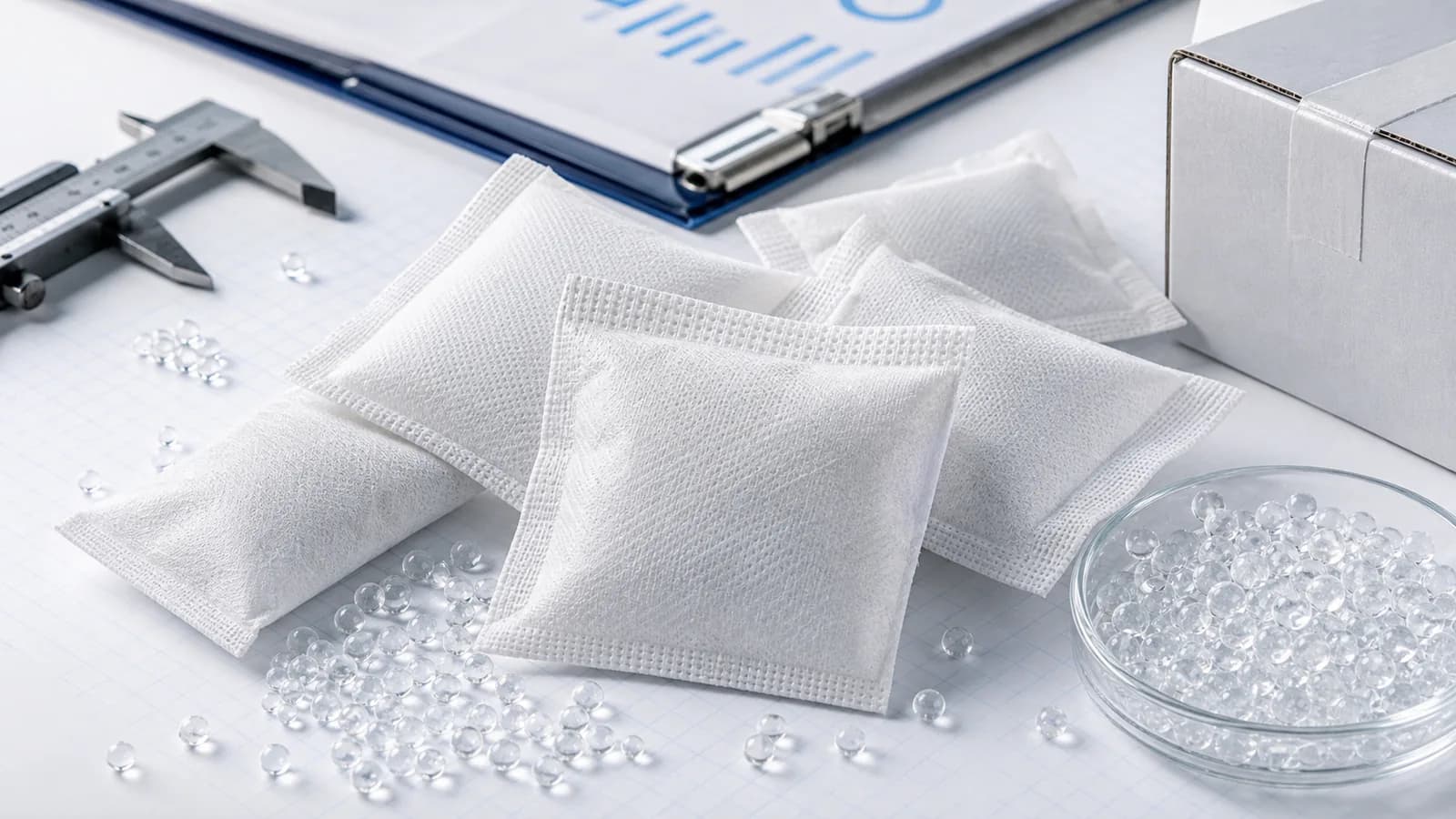
The HS code for silica gel: 2811.22
Silica gel is classified under Harmonized System (HS) heading 2811.22 - 'Silicon dioxide' - within Chapter 28 (inorganic chemicals). Most countries use this as the six-digit root and then extend it with their own national tariff suffix: the United States HTS commonly lands silica gel under 2811.22.10 (synthetic silica gel) or 2811.22.50 depending on form, the EU CN code is typically 2811 22 00, and many South Asian and GCC tariffs mirror the 2811.22 root with local extensions. The exact eight- to ten-digit code is set by the destination country's customs tariff, not by the supplier, so always confirm the final code with your customs broker for the importing country. The supplier's job is to declare the correct six-digit root and an accurate goods description so the broker can map it.
- Root HS code: 2811.22 (silicon dioxide), Chapter 28 inorganic chemicals.
- Destination country extends it with its own 8-10 digit tariff suffix.
- USA: HTS under 2811.22.xx; EU: CN 2811 22 00; confirm local extension per country.
- Indicating silica gel with dye is still classified on the silica gel base unless a national note says otherwise - confirm with the broker.
- The importing country's tariff schedule is authoritative, not the supplier.
Why the HS code matters to the buyer
The HS code drives three things the buyer cares about: the import duty rate, the regulatory controls applied at the border, and the speed of clearance. Get it wrong and the shipment can be reclassified at destination - triggering duty recalculation, penalties, demurrage while the container sits, and in the worst case a hold pending documentation. Because silica gel sits in the inorganic-chemicals chapter, some customs systems flag it for a chemical-safety documentation check (SDS) even though silica gel is inert and non-hazardous. Supplying the SDS and a clear goods description up front clears that flag before it becomes a delay. Buyers should pre-clear the final national code with their broker before the first order so the duty cost is known and budgeted.
- HS code determines duty rate, border controls, and clearance speed.
- Misclassification → reclassification, penalties, demurrage, and holds.
- Inorganic-chemicals chapter can trigger an SDS / chemical-safety check.
- Pre-clear the national code with a broker before the first shipment.
- Budget landed cost = product + freight + duty (driven by the code) + clearance.
Is silica gel a hazardous material for shipping?
Standard non-indicating silica gel (amorphous silicon dioxide) is not classified as a dangerous good for ocean or air freight - it is inert, non-toxic, and non-flammable, so it ships as general cargo with no IMDG/IATA dangerous-goods declaration required. The nuance is indicating silica gel: legacy blue indicating gel uses cobalt chloride, which carries hazard classification and is restricted in the EU, UK, Australia, and Canada under REACH-type rules; modern orange indicating gel uses a non-cobalt dye and avoids that issue. For customs and freight purposes, confirm which gel you are importing - non-indicating and orange are routine; blue can attract additional handling and labelling requirements at some destinations.
- Non-indicating silica gel: not a dangerous good; ships as general cargo.
- No IMDG / IATA dangerous-goods declaration required for the base product.
- Blue (cobalt chloride) indicating gel: hazard-classified and restricted in EU/UK/AU/CA.
- Orange indicating gel: non-cobalt dye, routine to import.
- Always match the SDS to the exact grade you are shipping.
Documents customs and buyers expect
A clean silica gel import clears fastest when the document set is complete and consistent. The core pack is: a commercial invoice (with the HS code and accurate goods description), a packing list (carton count, net/gross weight, sachet format and gram size), the bill of lading or air waybill, a certificate of origin where the buyer claims a trade-agreement duty preference, and the Safety Data Sheet (SDS) to satisfy the chemical-chapter check. Buyers in regulated end-markets may additionally request a Certificate of Analysis (COA) and a DMF-free statement; these are documents requested by buyers, not customs requirements. The single most common cause of delay is a mismatch between the invoice description, the packing list, and the HS code - keep all three saying the same thing.
- Commercial invoice with HS code + accurate description.
- Packing list: carton count, net/gross weight, format, gram size.
- Bill of lading / air waybill.
- Certificate of origin (for trade-agreement duty preference).
- SDS to satisfy the inorganic-chemical border check.
- Buyer-driven extras: COA, DMF-free statement (not customs requirements).
- Keep invoice, packing list, and HS code mutually consistent.
How to avoid clearance delays
Most silica gel clearance delays are self-inflicted and preventable. Pre-clear the national HS code and duty rate with your broker before ordering, so there are no surprises. Make sure the supplier's invoice description matches the physical goods exactly - 'synthetic silica gel desiccant, paper sachets, 5g, non-indicating' is far better than a vague 'desiccant'. Send the SDS to your broker before the vessel arrives so any chemical-chapter flag is resolved in advance. If you claim a trade-agreement preference, confirm the certificate of origin is the correct format for that agreement. And for first shipments, ask the supplier to share a draft document set for your broker to review before goods leave the origin port - catching a description or code mismatch on paper is free; catching it at destination is expensive.
- Pre-clear the code and duty with the broker before ordering.
- Use a precise invoice description, not a vague 'desiccant'.
- Send the SDS ahead of vessel arrival to clear the chemical flag early.
- Verify the certificate-of-origin format for any duty-preference claim.
- Review a draft document set with the broker before goods leave origin.
What to send DryGelWorld for an export-ready quote
DryGelWorld ships from Karachi with documentation aligned to the inorganic-chemicals classification. To get an export-ready quote with the right paperwork, send: the product and format (sachet gram size, beads, or container strips), monthly quantity, destination country and port, Incoterms (FOB Karachi / CIF / DAP / EXW), whether you need indicating or non-indicating gel, and which documents your buyer or customs require (SDS, COA, certificate of origin, DMF-free statement). With the destination country specified, the quote can flag the typical document set for that market, though the final national HS extension and duty rate are always confirmed by your own customs broker.
- Product + format (gram size / beads / container strips).
- Monthly quantity and destination country + port.
- Incoterms: FOB Karachi / CIF / DAP / EXW.
- Indicating vs non-indicating gel.
- Required documents: SDS, COA, certificate of origin, DMF-free statement.
References
- Harmonized Tariff Schedule search (heading 2811) , United States International Trade Commission
- UK Integrated Online Tariff , HM Revenue & Customs